

Chasing Pots of Gold

Gold has been making headlines lately. Again!
When markets feel uncertain - whether due to global events, political noise, or economic concerns - investors often start looking for something that feels more stable. Recently, that attention has turned toward gold, especially as prices have surged and conversations about “safe haven” assets have increased.
This naturally leads to a common question: Should gold have a place in my portfolio?
Coincidentally, these conversations are happening right as March rolls around, when gold suddenly appears everywhere thanks to St. Patrick’s Day and the legendary pot at the end of the rainbow.
But when it comes to investing, chasing shiny objects can sometimes feel a bit like chasing that leprechaun: intriguing, exciting… and not always grounded in reality.
Let’s take a closer look at where gold fits in with a disciplined investment strategy.
Why Gold Gets So Much Attention
Gold has several qualities that naturally attract investors.
- It’s tangible
- It’s scarce
- It’s been valued for thousands of years
Unlike stocks or bonds, gold isn’t tied to a company or government. It simply exists.
That simplicity can make it appealing, especially during periods of uncertainty. But simplicity can also lead to a few common myths.
Myth #1: Gold Is a “Safe Haven”
Gold is often described as a stabilizer when markets become volatile. The idea is simple: if stocks fall, gold should rise. In practice, the relationship isn’t that clean.
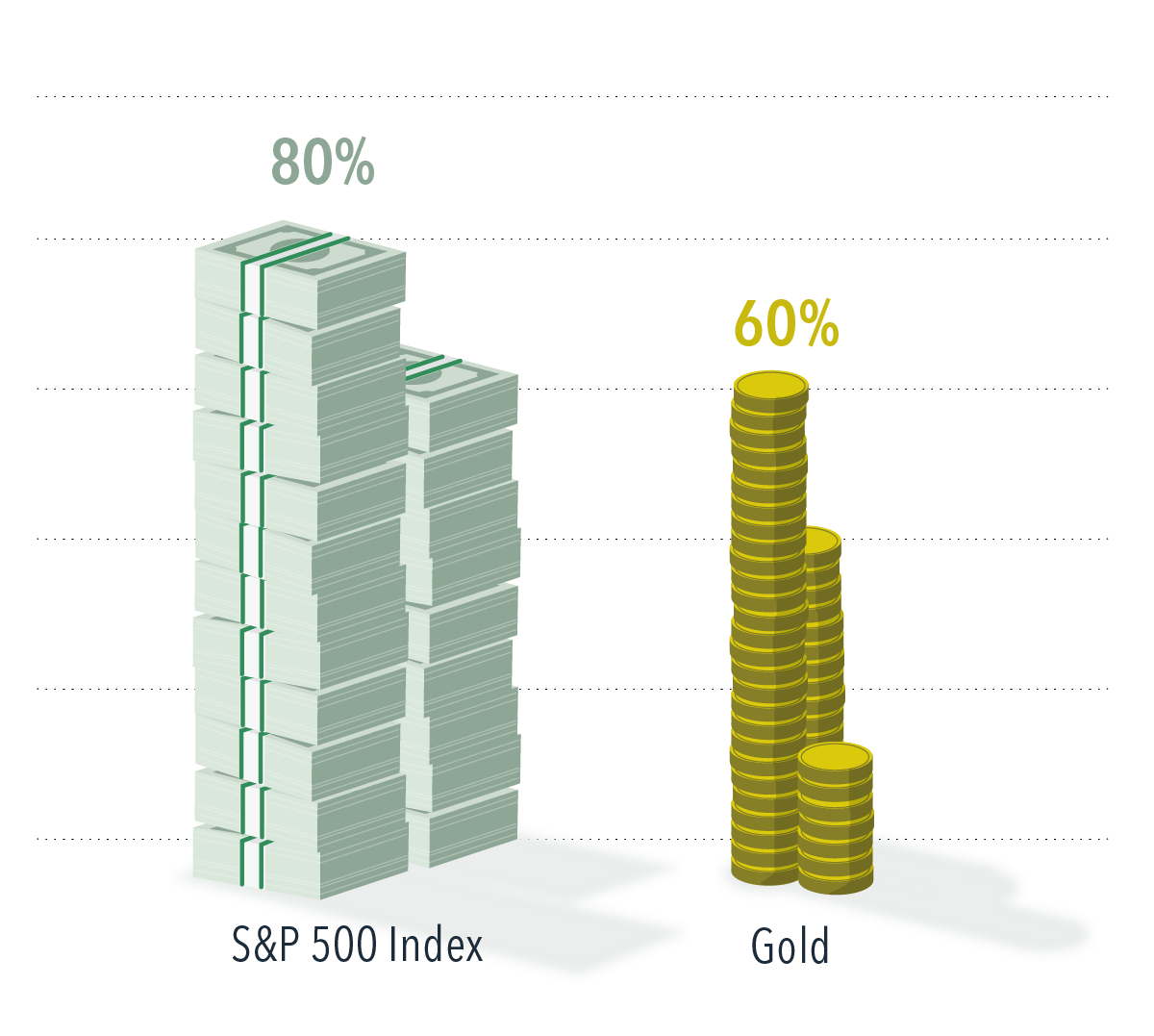
Gold has experienced significant ups and downs of its own and has historically delivered positive returns in fewer calendar years than the stock market. There have also been many periods when gold declined alongside other assets rather than offsetting them.
In other words, gold can be volatile too. It’s not always the calm harbor investors expect. As the chart below illustrates, gold has produced positive annual returns less frequently than U.S. equities since 1970.
Myth #2: Gold Tracks Inflation
Another common belief is that gold protects investors from inflation.
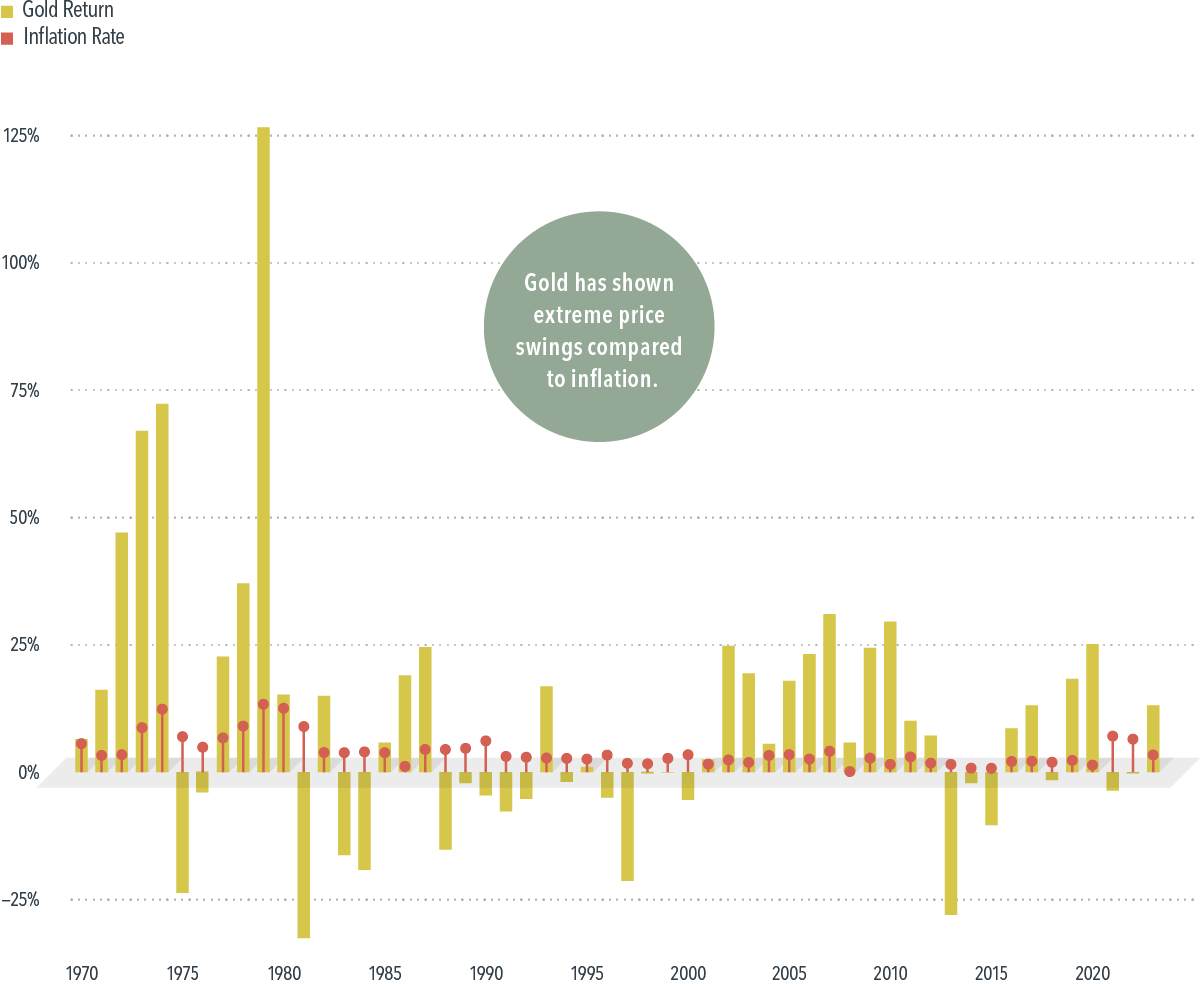
While gold prices have sometimes risen during inflationary periods, the relationship has been inconsistent. Gold prices tend to move in larger swings that do not closely match gradual changes in consumer prices.
Investors looking for assets that more closely track inflation often turn to tools specifically designed for that purpose, such as Treasury Inflation-Protected Securities (TIPS).
Gold may react to inflation at times, but it does not reliably move in step with it. The chart below highlights how gold’s price movements have historically been far more volatile than changes in inflation.
Productive vs. Non-Productive Assets
One helpful way to think about gold is by comparing it with productive assets.
Productive assets generate cash flow:
- Stocks produce earnings and dividends
- Bonds generate interest
- Real estate produces rental income
Their long-term value is tied to economic activity and human productivity.
Gold is different. It does not produce earnings, dividends, or interest. Its price is largely driven by supply, demand, and investor sentiment. That does not make gold a “bad” asset, it simply means it behaves differently.
Productive assets are constantly working for you while gold mostly just sits there. (Admittedly, it sits there very shinily.)
Can Gold Have a Place in a Portfolio?
For some investors, the answer may be yes, but in moderation.
Gold can sometimes provide diversification benefits, and some investors simply like having a small allocation to precious metals in their portfolio.
The key is understanding what gold can and cannot do. Gold can diversify a portfolio, but it has not consistently acted as a reliable safe haven, inflation hedge, or long-term growth engine. That role has historically belonged to productive assets.
If You Own Gold, Use a Disciplined Approach
If precious metals are part of your portfolio, the most important ingredient is discipline.
Rather than chasing headlines or reacting to price spikes, investors should follow a structured approach:
- Set a target allocation
- Create tolerance bands around that target
- Rebalance periodically
For example, if an investor decides to allocate 5% of their portfolio to gold and establishes 20% tolerance bands around that target, that means the acceptable range would be roughly 4% to 6%.
- If gold grows beyond 6%, it may make sense to trim some and reinvest elsewhere.
- If it falls below 4%, it may be an opportunity to add and bring the allocation back toward its target.
We typically recommend reviewing portfolios and rebalancing every 6–12 months, or sooner if allocations drift outside those tolerance bands.
This disciplined approach helps remove emotion from the process and prevents a common investing mistake of buying high and selling low.
The Real Treasure in Investing
Gold may glitter, but long-term wealth has historically been built through participation in productive assets - the companies, bonds, and properties that power the global economy. Those assets grow because people keep innovating, building, and creating value.
Gold may have a place in a portfolio, but it usually is not the treasure that drives long-term growth. Often, the real pot of gold comes from staying invested, staying disciplined, and letting productive assets do the heavy lifting over time.
And if a leprechaun ever offers you investment advice … it might be wise to get a second opinion.
If you’d like help thinking through how precious metals, or any other asset, fit into your portfolio, reach out. The team at Woodward Financial Advisors is always happy to talk.
Sources:
https://www.dimensional.com/insights/is-gold-a-safe-haven
https://www.dimensional.com/sg-en/insights/gold-hasnt-been-effective-at-tracking-inflation