

A Framework for Giving
Collectively, clients of Woodward Financial Advisors donated in the neighborhood of $2 million to charities in 2025. This is just the amount that we know about being donated via our assistance - it’s very likely the number is much higher if you include other gifts that were made. There is always great interest in topics around giving back, and we feel blessed to play a small part in helping you impact others in a positive way. I, too, share a passion for giving, and it is from this shared interest that I am inspired to share my three-part framework for giving.

As you began reading, you may have assumed that how related to what form your monetary gift should take. Perhaps a grant from your Donor Advised Fund (DAF), a Qualified Charitable Distribution (QCD), or a simple-to-execute cash gift. These are common points of emphasis in planning discussions we have together, and I undoubtedly tilted us in that direction in my opening sentence. However, I ask that you zoom out and consider how through this lens:
Do I want to give my time, my talents, or my treasure?
Giving back in any of these ways can be incredibly impactful, and many of us choose to provide support through multiple avenues. Over the course of our lifetimes, we will likely find ourselves naturally shifting towards different forms of giving, which is something to embrace. This framework asks you to consider that recognizing how you could support a specific mission may be the “aha!” moment in your charitable journey.
I consider a gift of time to be centered on presence and effort, rather than specialized knowledge. Examples of these gifts include street cleanups, blood drives, or volunteering to pack bags at a food bank. These activities are at the core of their charitable missions and are often flexible and accessible to volunteers. Gifting your time is a great option for people who may not have extra money to give but do have energy and availability.
A gift of talent involves applying your professional skills or lived experience to help an organization operate more effectively. Pro bono legal, accounting, financial, or technical work are common examples, as is serving on a nonprofit board. These contributions can be especially valuable because they replace services the organization might otherwise have to pay for. In most cases, you’re able to have an outsized impact for the amount of time committed.
Treasure gifts typically include cash donations, gifts of appreciated investment assets, or IRA distributions through Qualified Charitable Distributions (QCDs). Donations of tangible items such as clothing, books, or household goods also fall into this category, as they carry financial value. Monetary gifts often offer the greatest flexibility for charities and, in some cases, meaningful tax benefits to you as the donor.
If you’re wondering how to make the greatest impact, pause to consider why a baker donates excess bread. Give from what you have in abundance. Recognize that abundance will look different depending on your income, career stage, family responsibilities, and financial goals - and it will likely change over time. The diagram below captures what may be in abundance based on your career and life stage.
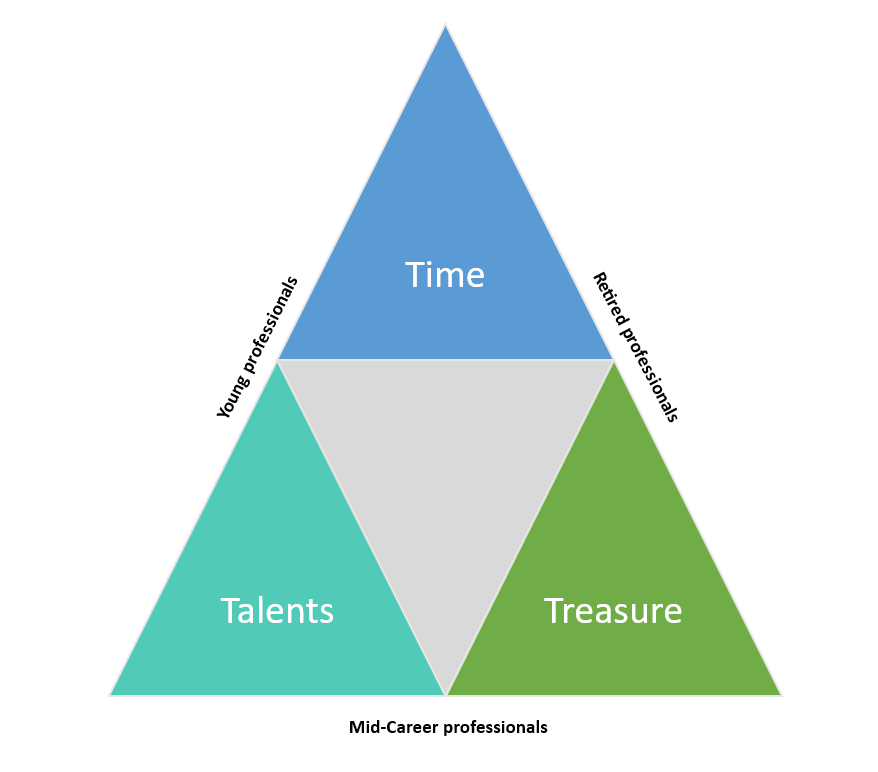
Thoughtful giving starts with an honest assessment of what you can offer most easily and sustainably.

I approach the questions of how much and how often by seeking to understand what is possible in an absolute sense and what aligns with the impact I wish to make. This helps provide a floor and ceiling for my giving. Consider your current free time and energy, how your financial goals are unfolding, and what you can commit to sustaining through the inevitable stressors that arise.
When volunteering your time and talent, setting a rhythm is often the easiest way to structure your service. Considering committing to one Saturday a month, or a few hours each quarter, or even a once-a-year commitment.
For financial gifts, consider the common guidelines: a percentage of income, bonus compensation, or your Required Minimum Distribution (RMD). The exact amount of your gift is a secondary consideration as the desire to support others is the ideal starting point for giving. You’ll never be better off financially for having given money away, as it would be akin to donating a dollar to save 35 cents.
Regardless of your cadence, eliminating the friction of repeated decisions has made the process more enjoyable for me and many of the people I work with. Consider how much easier it becomes to follow through on your intentions by doing any of the following:
- Partnering with an organization that volunteers or donates regularly.
- Habit Stacking(1) by pairing your gifting decisions with activities you already do or events you already attend.
- Setting up recurring gifts.

Finally, we arrive at what many people consider the easiest decision of all - who they want help. While many may argue that this should be step one in the giving framework, it sometimes leads to generosity in bulk. As we individually try to support every cause, our impact gets spread thin, and we may feel disconnected from the causes we most directly align with. I’ve sat across the table from well-intentioned people and gently introduced the radical idea that sometimes the best thing we can say is “no.”
If this framework sparks a desire to discuss how you can make an impact through charitable giving, please reach out to your team at Woodward. It’s our mission to help you get the most life out of your assets; and we’re thrilled to partner with you to accomplish that.
Habit Stacking(1) – a concept I learned from Atomic Habits, by James Clear.